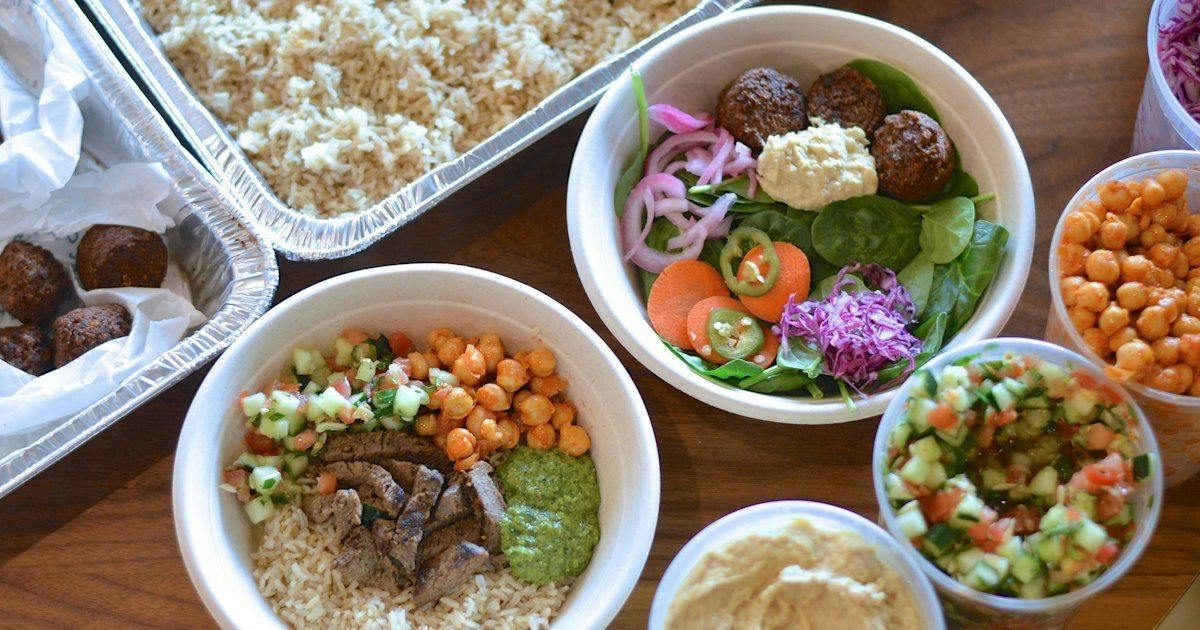
A weekly team lunch is one of the few perks that pays for itself twice — once in the room on the day, and again in the number of people who decide Friday is worth commuting for. It's also one of the easiest things to launch badly: too many decisions left open, a format that doesn't match how your team actually eats, and an office manager quietly spending four hours a week chasing headcounts.
This is the sequence that works, in order, with the decisions you actually have to make at each step.
Step 1: Pick one day and stop negotiating it
Pick the day and keep it. The value of a recurring program is that nobody has to think about it — people plan around a standing Friday lunch the way they plan around a standing meeting. A floating "sometime this week" lunch gets half the participation and twice the coordination.
Friday is the most common pick because it doubles as an in-office anchor. Wednesday is a strong second if you're trying to lift midweek attendance instead.
Cadence is a real decision too, and weekly isn't automatically right. Every other week at a better per-head budget often beats weekly at a budget that feels thin. On CaterCow you can run one-off, monthly, every other week, or every week — and switch when you learn what your team actually shows up for.
Step 2: Decide who pays before you decide what to eat
This is the step most programs skip, and it determines everything downstream.
Fully covered by the company. Simplest, best participation, most expensive. Works well at a fixed per-head budget you control.
Partially subsidized. You cover a set amount per meal and employees cover the rest. Set a company spend limit — pay up to $X per meal and have employees cover the remainder. This is the sweet spot for most companies over ~75 people: it stretches the budget, and the small copay cuts the no-shows who order and don't eat.
Employee-paid with the convenience provided. You bring the food in; people buy their own. Cheapest for you, lowest participation, and worth being honest with yourself about whether it reads as a perk.
A mixed model is completely reasonable, and often the smartest: a fully covered buffet one week and partially subsidized individual meals the others. That exact split — buffet style Wednesdays, individually-selected partially-subsidized meals the rest of the week — is a pattern we run for real programs.
Step 3: Choose the format — buffet, boxed, or group ordering
These three behave very differently, and the right answer depends on your floor plan and how hybrid you are.
Buffet / family-style is the most food per dollar and the most social. It needs a table, some space, and people willing to leave their desks. Best when you want the lunch to be the event.
Individually boxed is the right call for hybrid teams, back-to-back meeting cultures, and anyone with real dietary separation to manage. Nobody interrogates a tray; everyone gets a labeled box.
Group ordering is where each employee picks their own meal from the day's restaurant and it arrives labeled with their name. It's the highest-satisfaction option and the one that scales best past ~100 people, because it solves the "there's nothing here for me" problem structurally instead of by committee.
Here's what each looks like with real, live pricing from some of the CaterCow team's favorite restaurants:
Buffet that covers everyone: DIY Healthy Mediterranean Fast Casual Buffet from Noon Mediterranean- ⭐ 4.91 · $15.25 / person- A build-your-own line where the gluten-free, dairy-free, and vegetarian people all assemble something real from the same setup. For a 200-person site: roughly $3,050.
Best per-head value on a bowl bar: Build Your Own Boltiful Bowl Bar from Boltiful Fresh Kitchen- ⭐ 5.0 · $14.00 / person- Bowl bars are the workhorse of recurring programs — endlessly variable, easy to scale, and the format people don't get tired of.
Boxed for a hybrid floor: Individual Sandwiches, Wraps, and Salads from Dirty Water Dough- ⭐ 5.0 · $13.00 / person- Three formats in one order, individually packaged, no serving setup required.
Lowest-friction weekly default: Easy Order Subway® Sandwich Lunch Boxes from Subway Sandwich Catering NYC- ⭐ 5.0 · $10.49 / person- Not exciting, and that's the point — a cheap, reliable baseline week between the bigger ones.
Availability and pricing vary by market. Browse build-your-own salad and healthy bowl bars or individually boxed sandwiches and wraps to see what's live in your city.
Step 4: Handle dietary needs on day one, not after the first complaint
Collect restrictions before the first order, not after. You want the actual list — celiac vs. gluten-avoiding, dairy-free, nut allergies, vegetarian, vegan, halal, kosher — because "a few people have restrictions" is not something a restaurant can act on.
Then pick formats that solve it structurally. Build-your-own bars and bowl bars let people assemble around a restriction without a separate order. Where separation genuinely matters, boxed is safer than buffet, and labeling does the work: meals arrive labeled with the employee's name, the food description, and dietary tags.
If your list is complicated, that's a reason to use group ordering rather than a reason to avoid it — people self-select and you stop being the person in the middle guessing.
Step 5: Set a budget per person and do the arithmetic early
Work per head, per service, and then multiply out. For a 200-person site at 80% attendance:
- $11/head ≈ $1,760 per Friday ≈ $7,600/month
- $15/head ≈ $2,400 per Friday ≈ $10,400/month
- $18/head ≈ $2,880 per Friday ≈ $12,500/month
Two things to check before you take that to finance. First, attendance: a hybrid office at 45% attendance costs roughly half of what you modeled, which is good news for the budget and bad news for any program that needs a participation floor to run. Second, whether there's a contract or minimum underneath the number — on CaterCow there are no contracts and no minimum spend, so a light week is genuinely just a cheaper week and you can skip weeks without penalty.
If a partial subsidy is in play, the company-spend-limit mechanic gives you a hard ceiling per meal, which makes the monthly number predictable rather than a function of what people felt like ordering.
Step 6: Build a rotation, not a favorite
The failure mode of a successful program is boredom. Plan four to six weeks out with genuine variety across cuisine and format — a bowl bar, a Mediterranean buffet, boxed sandwiches, something regional — rather than defaulting to whatever went over best in month one.
Worth a rotation slot: Build Your Own Quinoa & Rice Bar from Creative Ideas Catering SF — ⭐ 4.97 · $17.95 / person
And a change of pace: Build Your Own Pita Sandwich Bar from Hummus Kitchen — ⭐ 5.0 · $16.95 / person
This is the part worth handing off. Account managers can take over the menu and dietary work along with the communication and logistics with restaurants — which is precisely the recurring cost that makes office managers quietly resent an otherwise good program.
Step 7: Clear the compliance questions once
Facilities and procurement teams ask about this early, and the answers are simpler for delivered catering than for onsite service:
- Food safety and permitting sit with the restaurant preparing the food — they're operating under their own health-department licensing, the same as for any other order they fill.
- Insurance usually means someone wants a certificate of insurance on file. If that term is new, here's what a COI is and how they work.
- Onsite service changes the picture. The moment a vendor sends staff or a vehicle to serve on your property, you're into permitting and site-access questions that dropped-off catering never raises.
- Billing and tax status — pay by card or invoice, billed directly to finance, with tax-exempt forms handled if your organization qualifies.
Restaurant reliability is worth asking about too. On CaterCow, restaurants are vetted with test deliveries where we photograph how the food actually arrives in its packaging and track punctuality and service before they stay on the platform.
Step 8: Run four weeks, then change one thing
Give it a month before you judge it, then look at three numbers: participation rate, cost per person actually fed (not per person invited), and whether the same three complaints keep coming up. Change one variable at a time — the day, the format, or the subsidy — because changing all three teaches you nothing.
Mistakes that sink these programs
- Launching without a subsidy decision. You'll relitigate it every month.
- Picking buffet for a hybrid floor. Half the food goes uneaten and the remote-heavy days feel like a waste.
- Treating dietary needs as an exception process. It becomes one person's unpaid second job.
- Signing a commitment sized to full attendance. Hybrid attendance is not yours to control.
- No owner. Someone has to own the calendar, even if a vendor owns the menu.
Recurring Lunch Program FAQs
How much does a weekly employee lunch program cost? Budget $11–$18 per person per service for delivered catering, times your actual attendance. A 200-person site at 80% attendance runs roughly $7,600–$12,500 a month for four Fridays.
Do we need a minimum headcount? Not for delivered, per-order catering — there are no minimums. Onsite popup and cafeteria models effectively do require one, because labor is committed whether people show up or not.
Buffet or individually boxed for a recurring program? Boxed for hybrid teams, tight schedules, and real dietary separation. Buffet when you want the lunch to be a social event and you have the space.
Should employees pick their own meals? Past roughly 100 people, usually yes — group ordering solves menu fatigue and dietary fit at the same time, and meals arrive labeled per person.
Can one program cover two offices? Yes, with each site ordering from its own vetted local restaurants and running its own cadence.
How far ahead do we have to plan? Plan the rotation four to six weeks out for your own sanity. Individual orders can be placed far more quickly than that.
Start with one Friday
You don't need the whole program designed to begin. Pick a Friday, pick a format, set a per-head budget, and run it once — you'll learn more from one real lunch than from a month of planning.
Set up recurring group ordering to have your team choose their own meals, or start from the managed program page for your city if you'd rather hand the menu and logistics to an account manager.